Resources and Additional Information- CASA/County Counsel Roundtable Discussion

Here is a resource list I created for a presentation I’m doing tomorrow (July 15, 20140) titled: “EXPLORING THE DIVERSE MENTAL HEALTH NEEDS OF THE AFRICAN AMERICAN FAMILY –By understanding the negative impact stress, trauma, poverty and homelessness have on the wellbeing of kids in foster care.”

I hope it’s helpful!

CASA Roundtable Resources

Mental Health and Wellness…What Does it Mean?

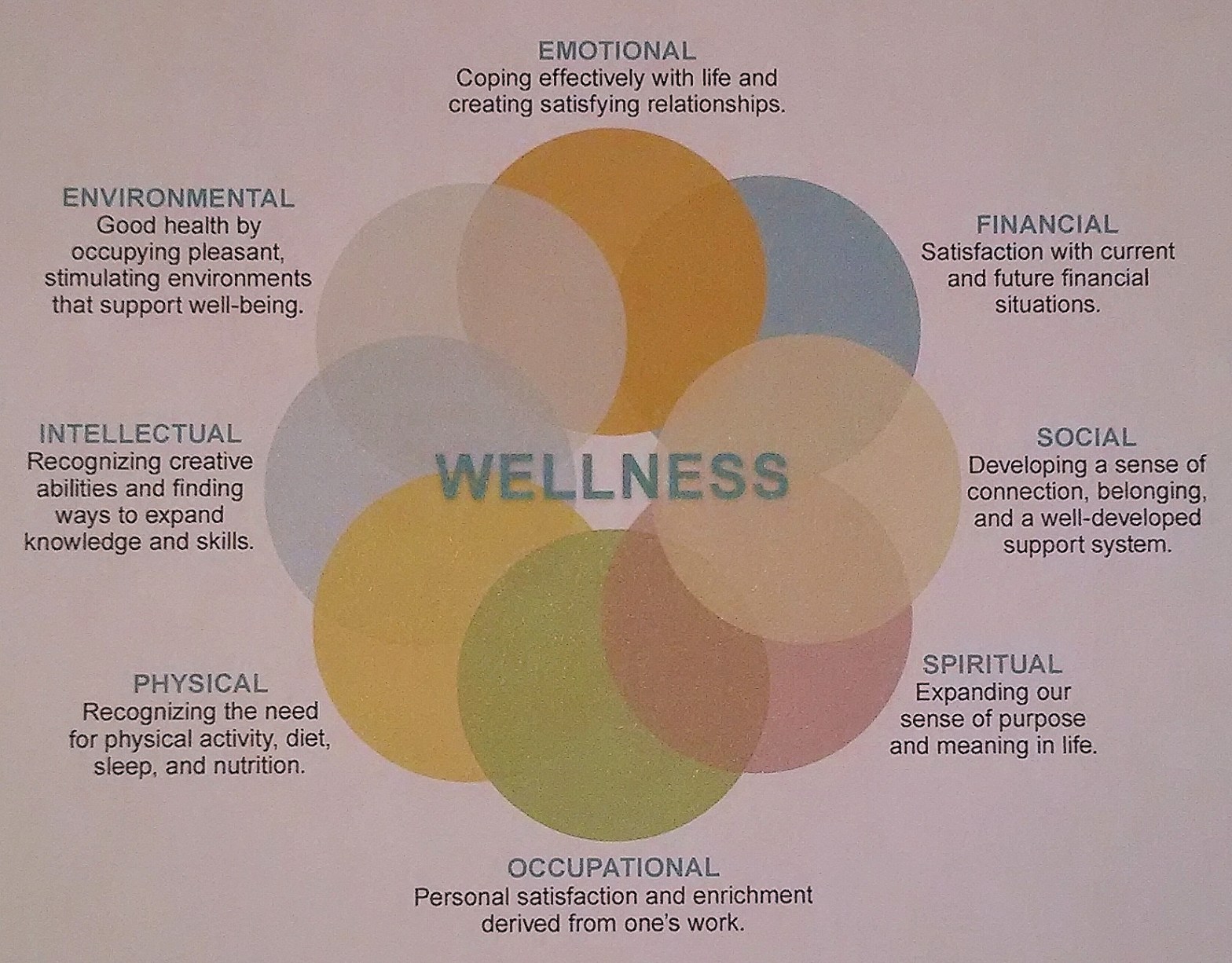
According to UC Davis (http://shcs.ucdavis.edu/wellness/#.U8QxB_ldWSo), wellness is defined as “Wellness is an active process of becoming aware of and making choices toward a healthy and fulfilling life.”  They further write ” Wellness is more than being free from illness, it is a dynamic process of change and growth.”   The World Health Organization defines it as “…a state of complete physical, mental, and social well-being, and not merely the absence of disease or infirmity.”   With THIS understanding, it becomes very clear why we need to focus on WHOLE health promotion, and not continue to separate physical and mental health.  

In 1976 Dr. Bill Hettler, co-founder of the National Wellness Institute (NWI), identified six demensions of wellness.  They list them as:  occupational, emotional, spiritual, intellectual, social and physical.  Since then, environmental has been added.  Dr. Hettler asserts that “Applying a wellness approach can be useful in nearly every human endeavor.”

This holistic wellness model, as created by Dr. Hettler (1976) explains:

• how a person contributes to his or her environment
and community, and how to build better living
spaces and social networks;
• the enrichment of life through work, and its
interconnectedness to living and playing;
• the development of belief systems, values, and
creating a world-view;
• the benefits of regular physical activity, healthy
eating habits, strength and vitality, as well as
personal responsibility, self-care and when to seek
medical attention;
• self-esteem, self-control, and determination as a
sense of direction;
• creative and stimulating mental activities, and
sharing your gifts with others.

COME ON EVERYONE…LET’S MAKE CHANGES.  EVERYONE DESERVES OPTIMAL MENTAL AND PHYSICAL HEALTH!!!


Commonly misunderstood definitions (Source: DHHS (1999)

Mental Health The successful performance of mental function, resulting in productive activities, fulfilling relationships with other people, and the ability to adapt to change and to cope with adversity.

Mental Illness The term that refers collectively to all mental disorders, which are health conditions characterized by alterations in thinking, mood, or behavior (or some combination thereof) associated with distress and/or impaired functioning.

Mental Health Problems Signs and symptoms of insufficient intensity or duration to meet the criteria for any mental disorder.


My Personal Mission Statement

As I have been recently working on creating my personal and professional brand, I was asked by a close friend “What’s your mission statement?”  After thinking long and hard, I realized I didn’t necessarily have one.  I’m clear about what I’m passionate about, which is part of it, but I had never narrowed it down to something specific, with a way to achieve it.  Understanding that this, like all things is a living ‘document’, and that it too will change over time, I still needed one to keep me focused on the here and now.

The questions I had to ask myself were: What am I trying to accomplish at this point in my life professionally?; What gets me going in the morning?; What’s going to guide my career, advocacy, education and activities? I answered all of these but then how do you craft it into one simple statement?  Seemed so much easier working on the ones for my business but this time…I was a LOSS for words!

I started checking on other sites and looking browsing what I found on Google.  After many drafts, I sent my final draft to a few of my close friends, ones who are familiar with what I’m doing professionally.

Last Draft: “My mission is to empower the African American community, particularly children and families, by reducing disparities in mental health.  I will achieve my mission through increased culturally relevant education, advocacy, and program development.”

Most said it sounded great, but one friend, the one who challenged me to create a mission statement in the first place, asked “to do what?”…after “children and families.”  GOOD Question!  Back to the drawing board.  BUT this time it only took me a few minutes.  What is below, is what I came up with.  Short, sweet, simple, and achievable!  

 “My mission is to reduce mental health disparities in the African American community.  I will achieve my mission through increased culturally relevant education, advocacy, and program development.”


This will drive everything I do and will keep me focused on my goals.  I am now updating all of my social media sites etc to reflect my newly crafted mission statement.  YAY!!!!


-Dr. Bree

The Road to Success in Entrepreneurship Part 2: Unlearning Things

#entrepreneurship

penina4niceinitiative's avatarThe NICE Reboot Book Blog on Entrepreneurship in the iEra

“The first problem for all of us, men and women, is not to learn, but to unlearn.”
— Gloria Steinem

“Education is what remains after one has forgotten what one has learned in school.”
— Albert Einstein

This is my second week writing about the road to success in entrepreneurship, my current series here on WordPress. The care and feeding of a successful entrepreneur has been on my mind lately. I have literally been on the road for the past two weeks in MA and TX giving educational related seminars, wearing both my Autism specialist/speech therapy and entrepreneur hats. It’s occurred to me (as both a professional speaker and female entrepreneur in particular),  that since I’ve experienced life differently the past few years,  the care and feeding protocols have changed. I’ve changed. My Theory of Mind and behaviors have changed as well.

As a consultant who is a female, bootstrapping, startup…

View original post 997 more words

A Day in the Life of American Adolescents: Substance Use Facts Update

#teens #adolescents #sustanceabuse

Misti Meyers's avatarProgressive Performance Solutions

The following is my excerpts from Substance Abuse and Mental Health Services Administration, Center for Behavioral Health Statistics and Quality. (August 29, 2013). The CBHSQ Report: A Day in the Life of American Adolescents: Substance Use Facts Update. Rockville, MD.

The following are direct excerpts for the most part but are what I think is the most relevant to me in my world anyway. This is the time to be gathering data…

  • This CBHSQ Report presents facts about adolescent substance use, including information on the initiation of substance use, past year substance use, emergency department visits, and receipt of substance use treatment
  • The data presented are from the 2010 and 2011 National Surveys on Drug Use and Health (NSDUHs), the 2010 Treatment Episode Data Set (TEDS), the 2010 National Survey of Substance Abuse Treatment Services (N-SSATS), and the 2011 Drug Abuse Warning Network (DAWN)

Substance Use:

According to combined 2010…

View original post 889 more words

Top 10: Websites

#mentalhealth websites

amyegriffin's avatarOn Counseling, In Discovery

While there is a plethora of information on mental health floating around the interwebs, there are a few websites that I find to be particularly helpful in discovering new ideas and a potential aide for my future practice. 

1. Mental Health America “MHA, the leading advocacy organization addressing the full spectrum of mental and substance use conditions and their effects nationwide, works to inform, advocate and enable access to quality behavioral health services for all Americans.”

2. Telemental Health Therapy Comparisons “This independent telemental health technology comparison site was created to help mental health providers quickly identify the best technology for their online therapy practice or network. From HIPAA compliant video platforms to encrypted email, or therapy Apps, you’ll quickly identify the latest mental health technologies available in an unbiased comparison.”

3. U.S. Department of Veterans Affairs: Mental Health This is an excellent resource to provide to veterans or civilian families…

View original post 335 more words

Filling the Gaps

#wellness

fjfritz's avatarThe Divine Guide Within

In my limited-yet-growing experience of working with clients in a therapeutic setting, I find myself in the stage of trying different techniques and interventions from various theoretical orientations. While I do have a desire to work within a specific theory, my theory of choice would require a long-term therapy commitment.

Given the pace of today’s society, my wager is the use of long-term therapy sessions (meaning a year or more) will fade as short-term sessions (8 weeks to 6+ months) emerge to the forefront of mental health treatment. This has already been happening for clients who rely on insurance plans for payment of services. Time is a precious commodity. Practicality has dictated I become familiar with theories designed for more immediate results.

As an experiential learner I gain understanding through trial and error. While I do not recall the instance I am quite sure a simple “Don’t touch that! It’s hot!”…

View original post 471 more words

Suicide Prevention

#suicideprevention

Healthy Campus Initiatives's avatarHealthy Campus Inititatives

Image

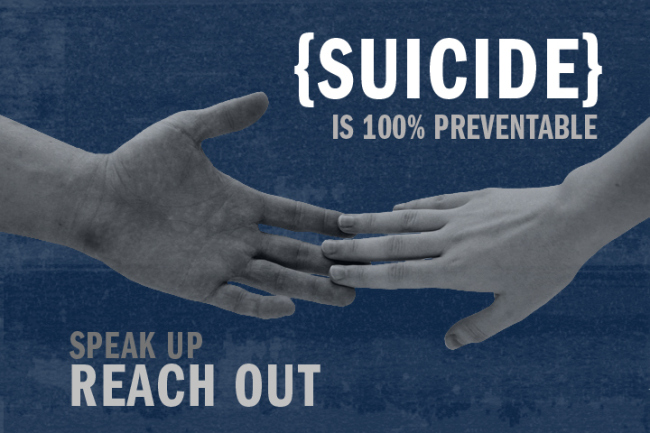
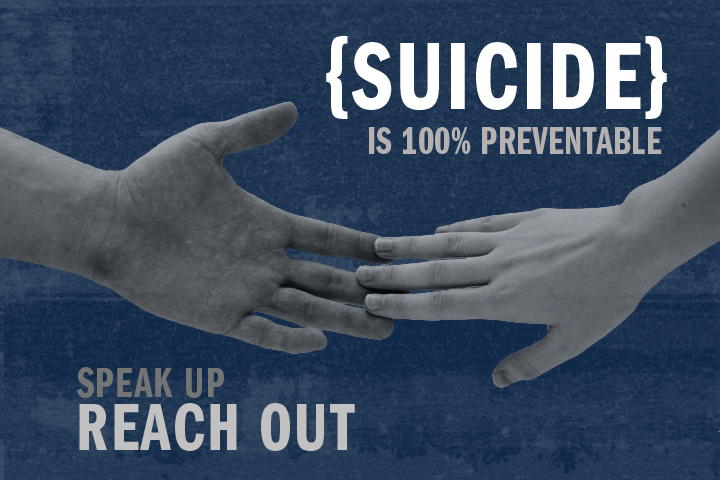
Image Source: http://allianceforsuicideprevention.org/wp-content/uploads/2012/04/suicide_speak_reach.jpg


            Every 14 seconds someone in the United States commits suicide, according to the American Foundation for Suicide Prevention (AFSP). This results in nearly 40,000 deaths a year in the United States due to suicide. This number is too high, and it’s up to you and I to change that.

            Rowan recently received a grant from SAMHSA to start a large suicide prevention campaign. So, I think it’s time to talk about what we can do to help people suffering from suicide ideation, and here are some ways how:

  • Get involved and become available. This shows support.
  • Be willing to listen, and accept his or her feelings.
  • Don’t judge him or her, and don’t debate with the person whether suicide is wrong.
  • Don’t be sworn to keep this a secret. You need to seek support before it’s too late.
  • Get help from a crisis counselor.

View original post 99 more words

Better Trials, So Failure Isn’t All Bad

naylorsa's avatarThe Finch and Pea

Image courtesy of Zachary Veach Image courtesy of Zachary Veach

The National Institute of Mental Health (NIMH) is rolling out new rules for clinical trials testing psychiatric drugs or interventions. For years, applications have proposed testing to see if Drug X helps with a particular condition, like depression, schizophrenia, anorexia etc.

If a drug does show an effect on the particular condition being tested, we have learned that we may have a new treatment for that condition. “Hooray!” If a drug does not show an effect on the particular condition being tested, we have learned that we may not have a new treatment for that condition, which is pretty much what we knew before the expensive clinical trial.

The NIMH has created new funding rules in an attempt to address this issue.

View original post 302 more words